Aerospace
Application: Aerospace
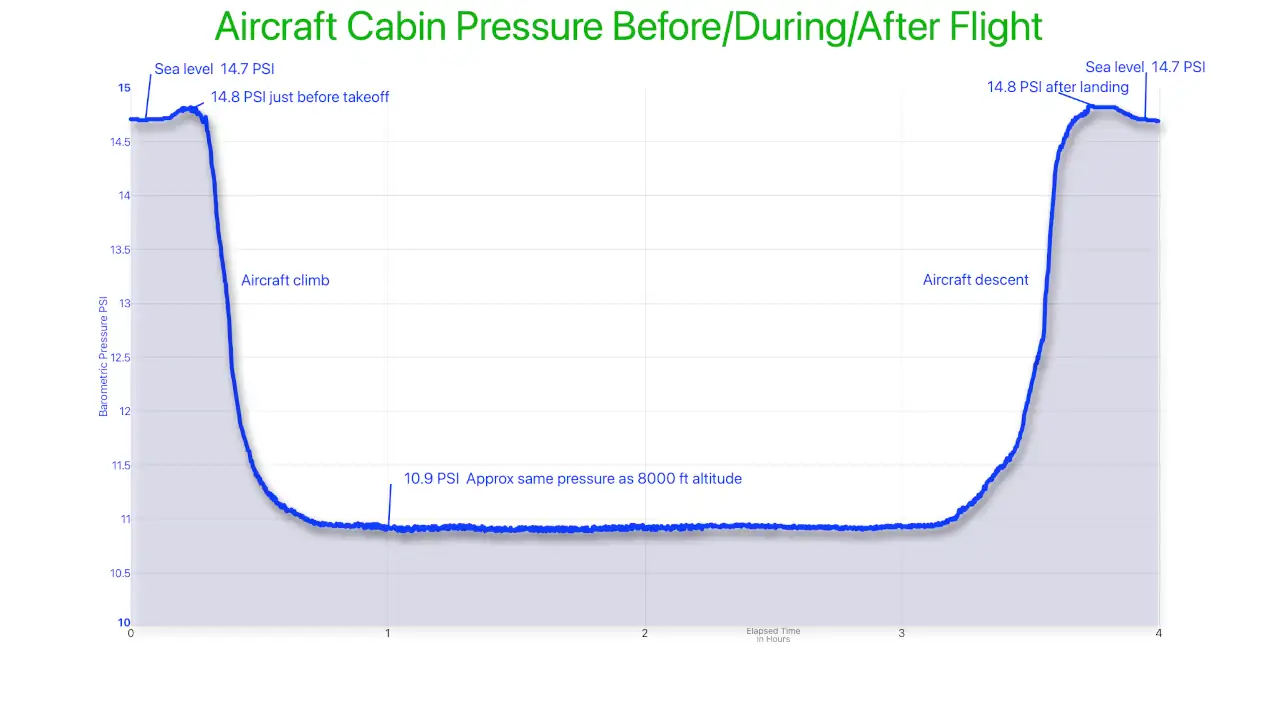
With the recent occurrence of a door plug blowout on an aircraft in Alaska, we thought it would be interesting to measure cabin pressurization during a flight. To verify that the aircraft cabin pressurization system was working properly, a Precision Barometric Pressure logger was used.
The graph shows a 3 hour flight, from sea level to sea level. Just before takeoff the cabin is slightly pressurized, about 0.1 PSI above ambient, When the aircraft takes off, cabin pressure is gradually reduced to about 10.9 PSI, about the same pressure as at 8000 feet altitude and was held fairly constant until descent. Pressure gradually rises back to 14.8 PSI during descent, and then drops to 14.7 PSI shortly after landing.
This is just about exactly what we would expect. The cabin pressure at max altitude is kept high enough for passenger comfort and health, and low enough so that the cabin is not stressed anywhere near or beyond its capability. Nowadays pressurized-cabin aircraft have two relief valves that open if the cabin pressure ever rises beyond acceptable limits, and a reverse relief valve that opens if the pressure inside the aircraft is ever negative relative to the outside pressure.